
Carbon Flash vs Carbon Fiber - GM's Confusing Name
Carbon Flash vs. Carbon Fiber: Understanding the Differences
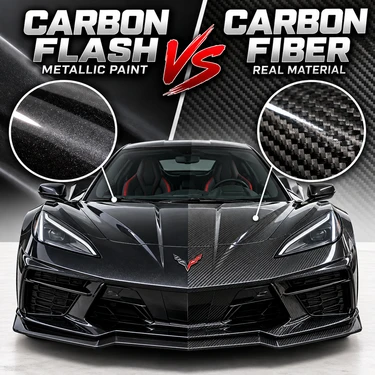
When shopping for exterior upgrades for your C8 Corvette, you've likely encountered two popular finish options: Carbon Flash Metallic and Carbon Fiber. While these finishes are commonly offered on factory GM components and aftermarket Corvette accessories, they are two entirely different things.
At Wildhammer Motorsports, one of the most common misconceptions we've encountered over the years is customers assuming that Carbon Flash is a type of carbon fiber or that the two finishes are interchangeable. Despite sharing the word "carbon" in their names, Carbon Flash Metallic is a paint color, while carbon fiber is an actual material.
Understanding these differences is important when selecting exterior accessories for your C8 Corvette, especially when trying to match existing factory components or achieve a consistent appearance throughout your vehicle.
Let's break down what makes these two finishes different and how to determine which option is right for your Corvette.
What Is Carbon Flash Metallic?
Carbon Flash Metallic is a dark metallic paint finish used by General Motors on various Corvette exterior components. It features a deep, near-black appearance with subtle metallic flake that becomes more noticeable under direct sunlight or bright lighting.
Despite its name, Carbon Flash Metallic does not contain carbon fiber and does not replicate the woven appearance of genuine carbon fiber.
The finish is essentially a glossy, dark metallic paint designed to complement the aggressive styling of the C8 Corvette.
Where Is Carbon Flash Used on the C8 Corvette?
Depending on the model year, trim level, and factory options, Carbon Flash Metallic or Carbon Flash-painted components can be found on various exterior parts, including:
-
Front splitters and lower aerodynamic components
-
Side skirts and rocker panels
-
Rear spoilers and rear wings
-
Exterior trim and accent pieces
-
Select wheels and other painted exterior components
Many aftermarket manufacturers also offer Carbon Flash-painted accessories specifically designed to complement the factory finish.
Key Characteristics of Carbon Flash Metallic
-
Material: A paint finish applied over a base component, commonly ABS plastic or another suitable substrate.
-
Appearance: Deep, glossy, near-black metallic finish.
-
Texture: Smooth painted surface without a visible carbon fiber weave.
-
Metallic Effect: Fine metallic particles create subtle sparkle under direct lighting.
-
Cost: Generally more affordable than comparable genuine carbon fiber components.
-
Maintenance: Typically cleaned and maintained like other painted automotive exterior surfaces.
One of the biggest advantages of Carbon Flash Metallic is its ability to create a consistent appearance across multiple exterior components without the higher cost associated with genuine carbon fiber.
What Is Genuine Carbon Fiber?
Unlike Carbon Flash Metallic, carbon fiber is an actual composite material used in the construction of automotive components.
Carbon fiber parts are manufactured using woven carbon fiber reinforcement combined with a resin system to create a lightweight, rigid composite structure. Depending on the manufacturing process and intended application, these components may offer significant weight savings compared to conventional materials.
One of the most recognizable characteristics of carbon fiber is its distinctive woven pattern, which is often visible beneath a glossy clear coat.
Rather than relying on metallic paint to achieve its appearance, genuine exposed carbon fiber showcases the material itself.
Where Is Carbon Fiber Used on the C8 Corvette?
Genuine carbon fiber components are available through both General Motors and numerous aftermarket manufacturers for the C8 Corvette platform.
Common applications include:
-
Carbon fiber front splitters
-
Carbon fiber side skirts and rocker extensions
-
Carbon fiber rear spoilers and wings
-
Carbon fiber front dive planes and aerodynamic accessories
-
Carbon fiber engine covers and engine bay components
-
Carbon fiber exterior trim pieces
-
Carbon fiber wheels on select Corvette models and configurations
Certain factory Corvette packages also incorporate genuine carbon fiber components for their appearance, weight savings, or aerodynamic performance.
Key Characteristics of Genuine Carbon Fiber
-
Material: Woven carbon fiber reinforcement combined with resin.
-
Appearance: Distinctive visible woven pattern, commonly finished with a glossy clear coat.
-
Texture: Generally smooth on the exterior, with the carbon fiber weave visible beneath the finish.
-
Weight: Can provide weight savings compared to conventional components, depending on construction.
-
Cost: Typically more expensive due to materials and manufacturing requirements.
-
Maintenance: Requires appropriate cleaning and care, including protection of the exterior clear coat against UV exposure.
Genuine carbon fiber is especially popular among Corvette owners looking for a premium appearance inspired by motorsports.
It's important to understand that not all carbon fiber components are manufactured equally. Differences in weave style, resin, construction methods, and clear-coat quality can affect the appearance, weight, durability, and price of the finished product.
Carbon Flash vs. Carbon Fiber: Side-by-Side Comparison
Although both finishes can look dark and glossy from a distance, their differences become immediately apparent when viewed up close.
| Feature | Carbon Flash Metallic | Genuine Carbon Fiber |
|---|---|---|
| What Is It? | Metallic automotive paint | Composite material |
| Appearance | Glossy, near-black metallic | Visible woven carbon pattern |
| Carbon Fiber Weave | No | Yes, when exposed |
| Metallic Flake | Yes | Not inherently |
| Base Material | Commonly ABS plastic or another substrate | Carbon fiber composite |
| Weight Savings | Depends on underlying part | Potentially lighter, depending on construction |
| Price | Generally more affordable | Generally more expensive |
| Factory Availability | Available on various OEM components | Available on select OEM components and packages |
| Aftermarket Availability | Widely available | Widely available |
The most important distinction is simple: Carbon Flash is a paint color. Carbon fiber is a material.
Does Carbon Flash Look Like Carbon Fiber?
Not really, especially when viewed up close.
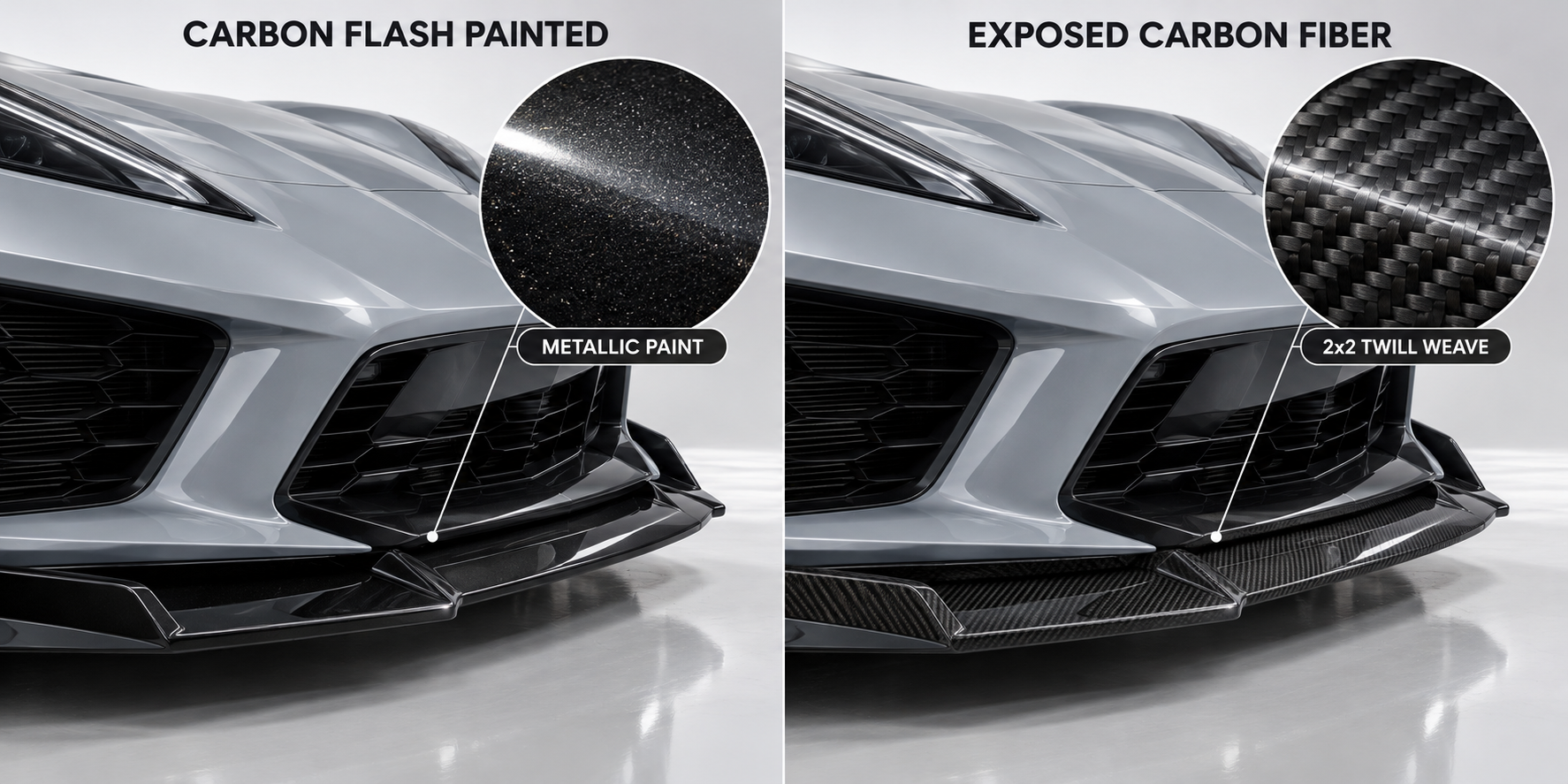
While both finishes can appear dark and glossy in photographs, Carbon Flash Metallic has a smooth painted appearance with fine metallic flake. Genuine exposed carbon fiber has a recognizable woven pattern visible beneath the clear coat.
Under direct sunlight, Carbon Flash may reveal subtle metallic sparkle, whereas genuine carbon fiber highlights the alternating strands of its woven construction.
This distinction is particularly important when ordering exterior accessories online, where product photography, lighting conditions, and image compression can make the two finishes appear more similar than they actually are.
If you're purchasing a front splitter, side skirt, or rear spoiler advertised as Carbon Flash, you should not expect to receive a component with a visible carbon fiber weave.
Likewise, if you're purchasing genuine exposed carbon fiber, you should expect to see the woven carbon fiber pattern rather than a uniform metallic black painted finish.
Is Carbon Flash the Same as Painted Carbon Fiber?
No, and this is another important distinction.
A component manufactured from genuine carbon fiber can be painted in Carbon Flash Metallic or another automotive paint color. In that situation, the underlying material is still carbon fiber, but the painted surface conceals its woven appearance.
On the other hand, a Carbon Flash-painted ABS plastic component is not carbon fiber simply because the paint includes the word "carbon."
When shopping for Corvette exterior parts, it's important to distinguish between three different descriptions:
-
Carbon Flash-Painted: Describes the paint finish, not necessarily the material beneath it.
-
Exposed Carbon Fiber: Describes a genuine carbon fiber component with its woven construction visible through the finish.
-
Painted Carbon Fiber: Describes a genuine carbon fiber component covered with paint, which may conceal the weave.
Always review the manufacturer's material specifications rather than relying on the finish name alone.
Can You Mix Carbon Flash and Carbon Fiber on a C8 Corvette?
Absolutely! Many C8 Corvette owners combine Carbon Flash Metallic and genuine carbon fiber components to achieve a customized exterior appearance.
For example, a Corvette equipped with factory Carbon Flash exterior trim may be upgraded with a genuine carbon fiber front splitter or rear spoiler.
However, owners should understand that the finishes will not match perfectly.
Carbon Flash has a uniform metallic appearance, while exposed carbon fiber features a visible woven pattern. Even though both finishes are dark, the difference can become especially noticeable when components are installed directly next to each other.
For Corvette owners who prefer a completely uniform appearance, choosing the same finish across front splitters, side skirts, and rear spoilers may provide a more cohesive result.
Those looking for a more distinctive, motorsport-inspired appearance may prefer incorporating genuine carbon fiber accents throughout the vehicle.
Which Finish Is Better for Your C8 Corvette?
The right choice ultimately depends on your budget, styling preferences, and performance goals.
Choose Carbon Flash Metallic If:
-
You want to match existing factory Carbon Flash exterior components.
-
You prefer a smooth, glossy, near-black metallic appearance.
-
You're looking for a more budget-friendly exterior upgrade.
-
You want consistent styling across multiple aerodynamic accessories.
-
You don't necessarily need the weight-saving potential of carbon fiber.
Choose Genuine Carbon Fiber If:
-
You prefer the distinctive appearance of a visible carbon fiber weave.
-
You're looking for a premium, motorsport-inspired finish.
-
You want to explore potential weight savings from composite components.
-
You're upgrading existing factory carbon fiber accessories.
-
You're willing to invest more in materials and construction.
Neither option is universally better. Carbon Flash Metallic offers excellent visual appeal and affordability, while genuine carbon fiber provides a unique material appearance and potential performance-related advantages.
Keep in mind that carbon fiber does not automatically make an aerodynamic component more effective. Aerodynamic performance depends on the component's design, mounting, and intended function, not simply the material used to manufacture it.
Frequently Asked Questions: Carbon Flash vs. Carbon Fiber
Is GM Carbon Flash Metallic real carbon fiber?
No. Carbon Flash Metallic is an automotive paint finish used by General Motors. The paint itself is not carbon fiber and does not feature the woven construction associated with genuine carbon fiber components.
Does Carbon Flash Metallic have a carbon fiber pattern?
No. Carbon Flash Metallic has a smooth, glossy appearance with fine metallic flake. It does not have the distinctive woven pattern of exposed carbon fiber.
Is Carbon Flash Metallic black?
Carbon Flash Metallic is a very dark, near-black metallic paint finish. It may appear black in certain lighting conditions, but its subtle metallic flake differentiates it from conventional solid black paint.
Is carbon fiber lighter than Carbon Flash?
Carbon Flash is a paint finish, not a material, so the two cannot be directly compared by weight. A genuine carbon fiber component may weigh less than a comparable ABS plastic or other conventional component, but the actual difference depends on the part's construction.
Will aftermarket Carbon Flash parts match factory GM Carbon Flash?
Aftermarket manufacturers often formulate their Carbon Flash finishes to closely resemble the factory GM color. However, exact color matching can vary depending on the manufacturer, paint application, clear coat, and lighting conditions.
For the most consistent appearance, it's important to purchase components from reputable manufacturers that specifically identify their finish as Carbon Flash Metallic.
Do all genuine carbon fiber parts have the same weave pattern?
No. Carbon fiber components can use different weave styles, fiber orientations, and manufacturing methods. The appearance of exposed carbon fiber may vary between OEM and aftermarket manufacturers, even when both products are made from genuine carbon fiber.
Is Carbon Flash more durable than carbon fiber?
Not necessarily. Durability depends on the underlying material, construction, coating quality, and intended use. Both painted components and clear-coated carbon fiber parts can experience scratches, chips, or surface damage. Neither finish is automatically superior in every application.
Final Thoughts: Know the Difference Before You Buy
When shopping for C8 Corvette exterior accessories, understanding the difference between Carbon Flash Metallic and genuine carbon fiber can help prevent confusion, unexpected purchases, and mismatched exterior components.
While the names may sound similar, the distinction couldn't be clearer: Carbon Flash Metallic is a dark metallic paint finish, while genuine carbon fiber is a composite material with a distinctive woven appearance.
Both options can look fantastic on the C8 Corvette, but they deliver very different visual results.
At Wildhammer Motorsports, we offer a wide selection of OEM and aftermarket C8 Corvette exterior accessories, including front splitters, side skirts, rear spoilers, and other aerodynamic upgrades in a variety of finishes.
Whether you're looking to complement your Corvette's factory Carbon Flash accents or upgrade to genuine carbon fiber components, understanding exactly what you're purchasing is the first step toward achieving the appearance you want.
Explore our selection of C8 Corvette exterior accessories at Wildhammer Motorsports and find the right finish for your build.
Recent Posts
Carbon Flash vs Carbon Fiber - GM's Confusing Name
Carbon Flash vs. Carbon Fiber: Understanding the Differences When shopping for exterior upgrades fo...

C8 Corvette Z06 LT6 92mm Throttle Body Upgrade Review: Real Dyno Gains from Soler Performance SE3793-92NE
C8 Corvette Z06 LT6 92mm Throttle Body Upgrade Review: Real Dyno Gains from Soler Performance SE3793...

The Ultimate ACT Mod-Twin Clutch Guide for 2016–2024 Camaro LT1, SS & ZL1
Street vs Heavy Duty vs Extreme vs Race (Sprung vs Rigid Explained) Upgrading the clutch in your 201...

Roto-Fab Intakes for 6th Gen Camaro LT1/SS & ZL1 (2016–2024)
Roto-Fab Cold Air Intake for 6th Generation Camaro (2016–2024) – LT1, SS, and ZL1 Performance Upgrad...

Personalize Your C8 Corvette with Custom Engraved Badges – Stingray, E-Ray, Z06, and ZR1
If you own a C8 Corvette, you know that every detail counts. From performance upgrades to aesthetic...

Chevy Camaro Comeback: What We Know About the Future of the Iconic Muscle Car
Is the Chevy Camaro Making a Comeback? Breaking Down the Rumors and Enthusiast Conversations The Che...